

One integration, many local realities: building fiat rails for stablecoin payments
When I started working on Blockradar’s fiat integrations, one of the recurring challenges was how differently payment systems describe the same business outcome. A business wants to collect money from a customer and pay a supplier. The systems involved describe collections, conversions, wallet deposits, and bank payouts, each with its own requirements and definition of progress.
My work spans our fiat on-ramps, off-ramps, and payment integrations. A lot of it comes down to deciding which differences a developer needs to understand and which ones we should absorb into the infrastructure. Those decisions affect what a business can tell someone waiting for their money.
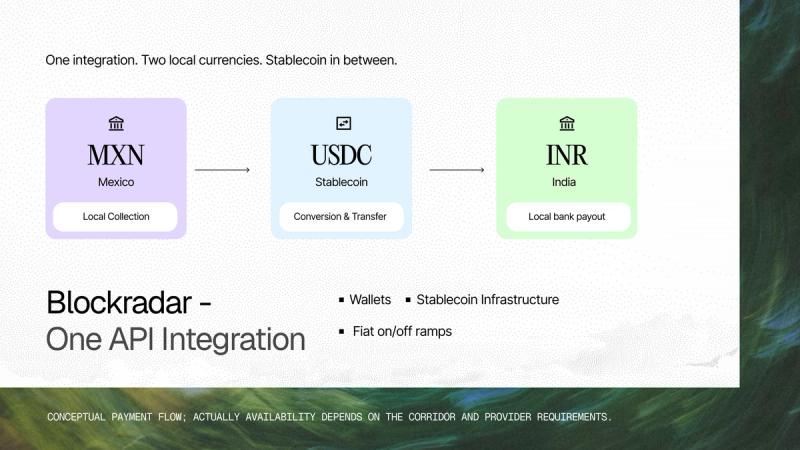
Consider an illustrative journey: a business collects Mexican pesos, settles that collection into a USDC wallet, and uses the balance to pay a supplier in Brazilian reais. The corridor is an example, but it brings together many of the questions we design around.
There are two separate payment legs here. The collection brings pesos into the stablecoin balance. The payout takes USDC from that balance toward the supplier’s local account. They belong to the same customer journey, but completing the collection does not mean the supplier has been paid.
Start with who needs to act next
Before our business can collect pesos or pay its supplier in reais, it needs approval to use the relevant payment services. Different providers can ask for different information, and sometimes a review leads to a request for additional documents or details.
As an engineer, I think about what the business needs to do next. If its application is under review, it needs a clear update. If something is missing, it needs to know what to provide and where to submit it. A single “pending” status leaves both situations looking the same, even though one requires action.
We give customers a common way to work through that process across providers. On the dashboard, they can see the current requirements and respond to requests for additional information. Through the API, an application or AI agent can retrieve those requirements, submit the relevant information, and check the case’s progress.
For the business in our example, that means its team can understand whether it is waiting for a review or needs to supply something before proceeding. A developer building that experience into an application can make the same distinction.
The shared experience does not make eligibility or approval interchangeable. Each provider still applies its own requirements for the services and jurisdictions it supports. What we unify is the way customers navigate the process, so every provider does not require an entirely separate onboarding experience.
Keep local payment details explicit
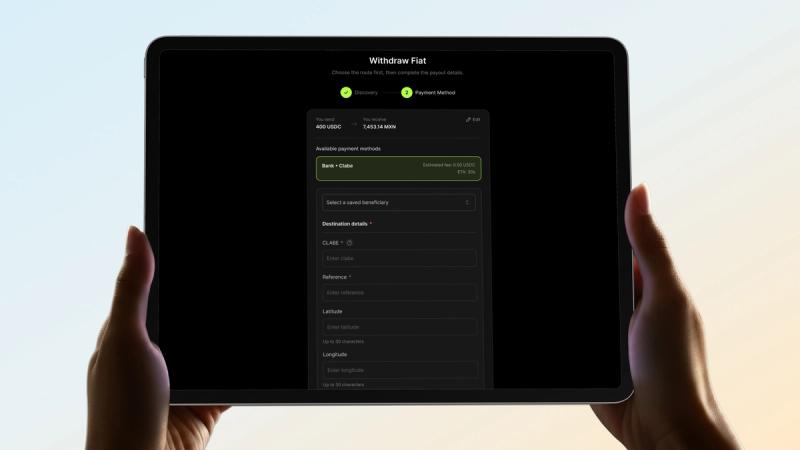
Once the business is ready to collect and pay out, the next question is what information each payment method needs. A Mexican bank-transfer flow may involve an 18-digit CLABE. A Brazilian Pix payout may ask for the supplier’s Pix key. A generic field labelled “account number” cannot adequately explain both.
On the dashboard, the form adapts to the chosen payment method, presenting the relevant fields. Through the API, an application or AI agent can retrieve the same requirements and collect the appropriate details within its own experience. For our illustrative business, this means working with the Mexican collection instructions on one leg and the supplier’s Brazilian payout details on the other. The integration has a common structure, while the information remains specific to the payment method.
That balance matters to me. A reusable interface should help developers accommodate local differences accurately. It should give them a foundation they can extend as their customers need more markets and payment methods.
“The customer paid” and “the wallet is funded” are different moments
Suppose the business creates a one-time payment order asking its customer to pay 20,000 Mexican pesos. The customer sends 19,900. In the collection flow described here, that mismatch triggers a refund. The payment order expects a specific amount, so receiving funds does not automatically mean the collection can proceed into conversion and wallet settlement.
The saved quote matters too. Even if the payment amount matches, an unusable saved quote can trigger a refund in this flow. The application needs to represent that outcome accurately rather than assume every fiat receipt will become a USDC deposit. These refund conditions belong to this particular example; they should not be read as a universal rule for every collection method.
If the amount matches and the quote remains usable, conversion can proceed. The business can use the resulting USDC once it settles into the wallet. Until then, acknowledging receipt of the customer’s pesos and showing an available stablecoin balance are different claims. I pay attention to that distinction because it affects what happens next. The business may be planning to fund its supplier payment from this collection. Its application needs to know when the wallet actually has the balance available to do so.
Quote the budget or quote the invoice
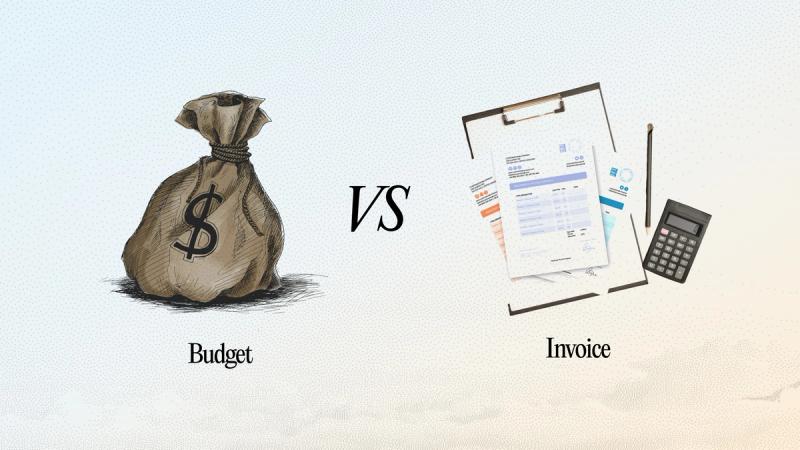
With USDC settled into its wallet, the business can prepare the Brazilian payout. Before requesting a quote, it needs to decide which amount is fixed. If the business has 1,000 USDC to spend, the quote needs to answer: how many reais will the supplier receive within that budget? If the supplier must receive the full invoice amount in reais, the quote needs to work backward: how much USDC must the business provide to deliver that amount?
Those are different instructions, and charges affect them differently.
For a simplified illustration, assume a quoted conversion rate of five reais per USDC and a separate charge of 10 USDC. These figures are hypothetical.
With a total budget of 1,000 USDC, the separate charge leaves 990 USDC available for conversion. At that illustrative rate, the supplier would receive 4,950 reais.
If the supplier instead needs exactly 5,000 reais, the conversion requires 1,000 USDC, and the separate 10 USDC charge needs to be funded on top. The business needs 1,010 USDC in total.
Some costs may already be reflected in the quoted rate. Those should not be subtracted again as though they were additional charges. Each cost needs to be counted once, according to how the quote presents it.
For me, this is an engineering decision with a direct business consequence. An application needs to distinguish “spend no more than this” from “deliver this invoice amount.” Otherwise, a payment can fit the sender’s expectations while leaving the supplier short.
A timeout asks a different question from a confirmed failure
After the business submits the supplier payout, its application needs to follow the original payment through to an outcome.
A timeout leaves that outcome uncertain. It does not establish that the payout failed, and it does not justify immediately sending another payment instruction. The next step is to check the original payout before deciding how to proceed. Otherwise, an attempt to recover from uncertainty can create a duplicate payment.
A confirmed failure raises another question: where are the funds now?
If the stablecoins have arrived for the payout but conversion fails, recovery can start from the original deposit. If conversion succeeds and the local payout then fails, the funds are in a different position. Recovery has to move them back before stablecoins can be returned.
There is also a later possibility: a payout succeeds and is subsequently returned. That return can require recovery even though the payment previously reached a successful state.
I think of a compensation plan as the steps the system can take to recover funds based on where the payment stopped. We design those plans alongside the successful journey because the completed steps determine what recovery requires.
For the business paying its Brazilian supplier, “payout failed,” “refund in progress,” and “funds returned” therefore need to remain distinct. A failed payout does not mean the USDC is already available again. Starting a recovery plan does not confirm that recovery has finished.
Those distinctions help the business give its supplier an accurate update and understand whether it can use the balance for another payment. I have found that thinking through these states early whether its funds received to payout completed or funds returned, makes the integration clearer. It forces you to ask what the business needs to know throughout the payment’s lifecycle, and what it can confidently tell its customer or supplier at each step.
Rehearse the whole journey before moving real money
The next step I want us to make possible is an end-to-end fiat simulation on testnet. The goal is for teams to rehearse onboarding, quoting, fiat collection, stablecoin settlement, and local payout without moving real money.
That should include the moments that change what an application needs to do: an onboarding case returning with a request for more information, a collection receiving the wrong amount, or a payout failing after conversion and starting a recovery plan. Teams should also be able to rehearse the difference between quoting a fixed spending budget and funding a fixed supplier invoice.
This is future work. The aim is to let developers test the full customer experience, including the explanations and next steps their product presents when a payment takes a different path.
That is the foundation we are building with Blockradar’s fiat on-ramps and off-ramps: a common integration that remains useful across local payment requirements, provider onboarding, and the stages between collection and payout.
I come back to the business collecting pesos and paying its supplier in reais. At each step, it needs to say something precise: we need additional information; your payment has been received; the USDC has settled; the supplier payout is processing; recovery is underway; the funds have been returned. Giving a business the information to make those statements accurately is part of making the payment useful.
Building across borders shouldn't mean rebuilding your payment infrastructure for every new market. With Blockradar, fintechs and payment platforms can connect stablecoin wallets to supported local fiat rails through a common API, reducing the complexity of collecting, converting, and paying out across currencies.
Whether you're building cross-border payments, merchant settlements, or global payouts, we're building the infrastructure so your team can spend less time managing integrations and more time building for your customers.
Ready to expand into your next market? Explore Blockradar or get started with our API documentation.
About Blockradar
Blockradar provides secure, developer-friendly stablecoin infrastructure for fintechs. Our non-custodial wallet APIs, transaction monitoring, and AML compliance tools make it easy to launch and scale stablecoin-powered financial services. From USDC and USDT payouts to onchain expense management, we help companies move money instantly and safely across borders—without building blockchain infrastructure in-house.
Blockradar is trusted by payment platforms, remittance providers, and Web3 startups building the future of finance.
Explore our API documentation and get started at https://blockradar.co