

A few years ago I was at Celo, a chain built specifically for payments. My job was to work with entrepreneurs building real local use cases: remittances where the last mile was a phone number, zero collateralized lending, microwork platforms paying people small amounts for real work, and local stablecoins so someone could hold value in the currency they actually spend.
I learned something there that stuck with me. Those founders could ship a stablecoin wallet in a weekend. What killed them was everything around the wallet: getting money in, getting money out at fair prices, and making it feel normal to the person on the other side of the app, who very often had no idea what a stablecoin was and did not care.
At Blockradar I have spent most of my time with local fintech founders, and the conversation keeps landing in the same place. They don't just want wallets. They want a balance layer they can build a business on top of.
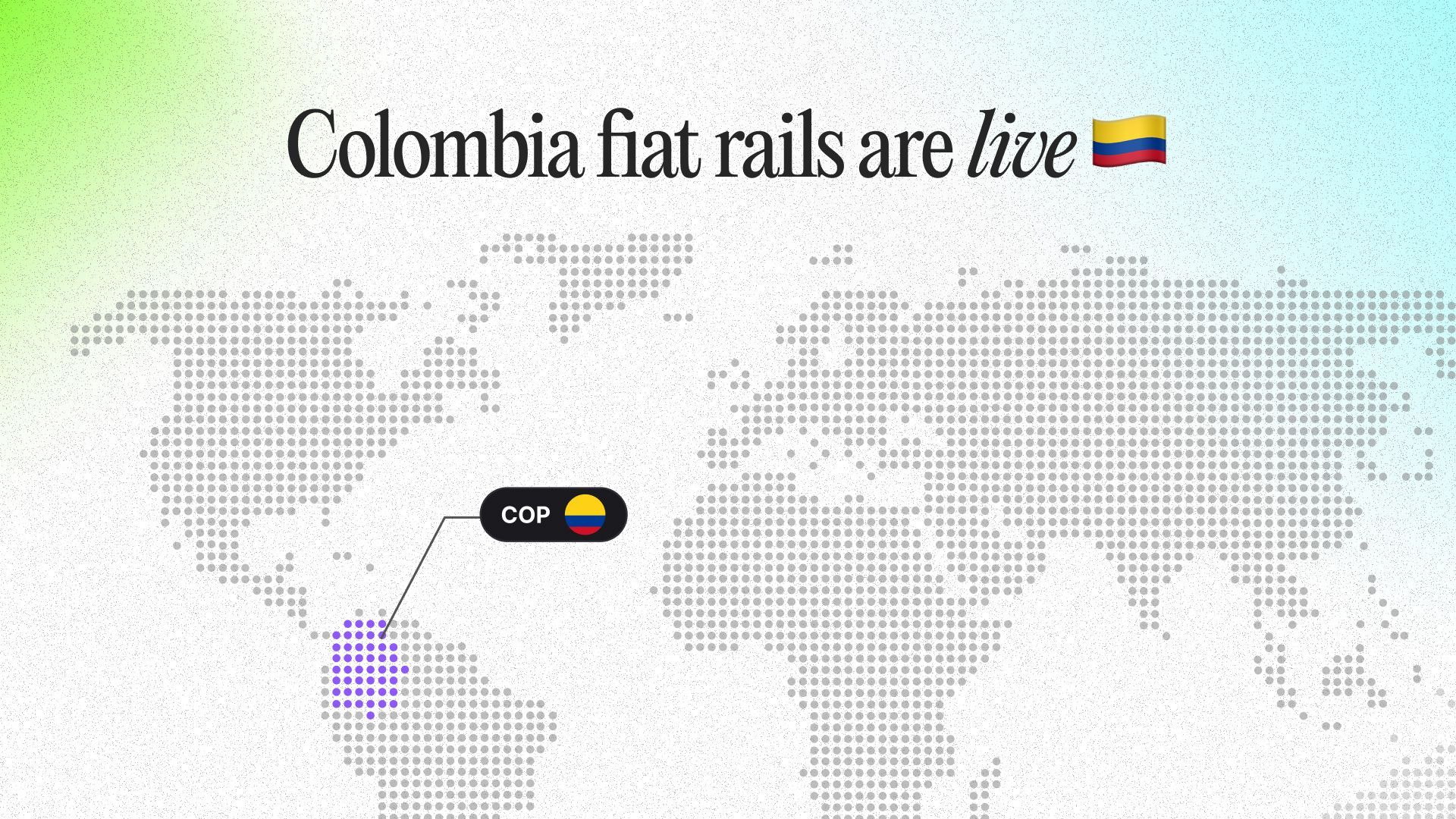
Today we are shipping the missing piece for Colombia: local rails, bank transfers and Bre-B, connected directly to that balance layer.
Why Bre-B changes the shape of this
If you have not been paying attention to Colombia, it is easy to miss how fast this moved.
Bre-B is the interoperable instant payment system run by Banco de la República. It feels surreal because Bre-B just went live a year ago on July 14, 2025. Instead of typing account numbers, users register a llave (a key): a phone number, an email, a national ID, or a merchant code. You send to the key, and the money lands in seconds, in any bank or wallet in the country.
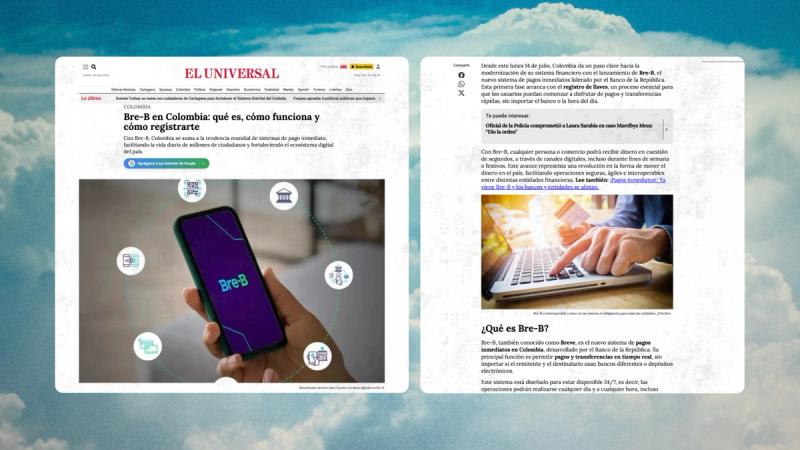
The adoption numbers are the part people underestimate:
- 1,070 million transactions in the first 8 months of operation
- ~35 million users enrolled, with more than 108 million llaves registered as of late June 2026
- Daily volume went from roughly COP 500 billion a day at launch to peaks near COP 1.2 trillion in a single business day by March 2026
- Peak days of up to 5.8 million transactions
- Average ticket around COP 152,509, which tells you this is everyday money and not just big transfers (All figures from Banco de la República, mid 2026.)
A few technical details that matter if you are building on it:
- Messaging standard is ISO 20022
- Maximum settlement time is 20 seconds
- Per transaction cap is 1,000 UVB, which is COP 12,110,000 in 2026 (your financial institution can set lower limits)
- Merchants have had QR since day one.
Colombia basically got its Pix moment, and it happened in about 8 months.
For a stablecoin product, this goes from a cool technology for crypto people to a usable infrastructure that businesses can practically use.. Moving between fiat and stablecoins went from a multiple quarter project for businesses trying to adopt them to something that works seamlessly in the background while the user is still looking at the screen. Pesos in, dollars held, pesos out, in seconds.
The full loop, pesos to dollars and back

Here is what this actually unlocks when you put it next to what we already ship.
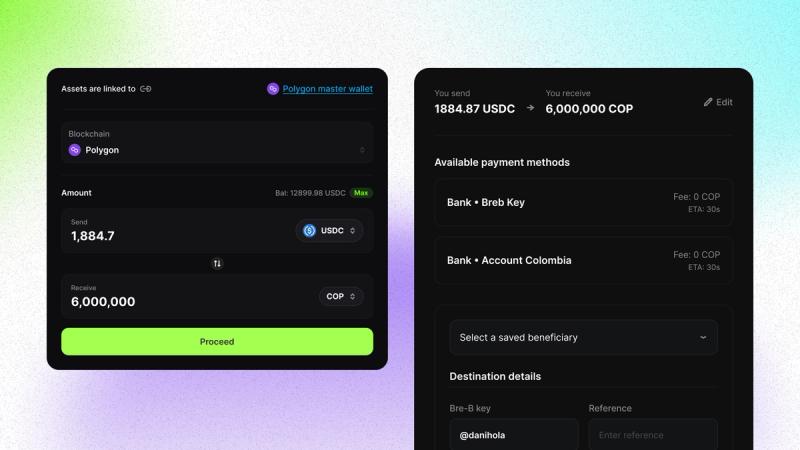
Pesos in. Your user pays with a llave (Bre-B) or debits their bank account. Funds settle to your account and we credit the corresponding stablecoin balance to that user's address. All instantly.
The balance sits and works. Every end user gets their own address and their own balance, not a shared omnibus mess. There’s also treasury management, so your team can see and move company funds without a spreadsheet and three signers in a WhatsApp group. Swaps between USDC, USDT and other supported assets, at rates you can actually quote to a customer. Automations, sweeps, payouts and webhooks, the boring stuff that if it breaks, decides whether you sleep at night.
And Earn. This is the one I get most excited about. Your idle balances generate rewards, and you decide what to do with them: pass them through to your users, keep them as margin, subsidize your fees, fund a rewards program… whatever you’d like.
For a Colombian founder that is fundamentally a business model and not a feature. A savings product where the float pays for the product. A remittance app that stops charging the sender because the balance is now earning revenue.
Pesos out. Withdrawing COP back to a llave or a bank account, same rails, same API surface.
How to integrate
The shape of the integration follows the same pattern as the rest of the Blockradar API. Base URL https://api.blockradar.co/v1, authentication with your x-api-key header, and webhooks for anything asynchronous.
At a high level:
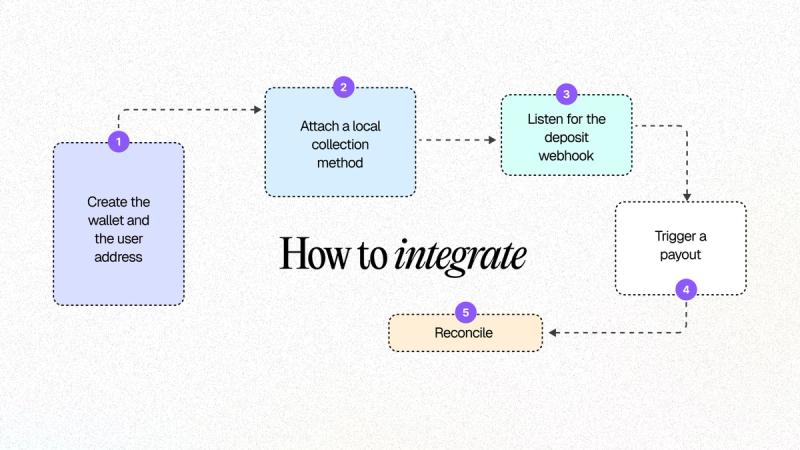
1. Create the wallet and the user address. If you are already on Blockradar this is done. Each end user gets their own address under your master wallet.
2. Attach a local collection method. Generate the deposit instrument for that user (Bre-B llave or bank transfer intent) so incoming pesos can be attributed to the right balance automatically.
3. Listen for the deposit webhook. When the payment settles on the local rail, you get an event and the corresponding stablecoin balance is credited to the user's address. Confirm to your user in-app at that point.
4. Trigger a payout. Off ramp from a balance back to a place or bank account, and track the status through the payout webhook.
5. Reconcile. Every movement, on chain and on rails, comes through the same transaction history and webhook stream, so you are not stitching together two systems in a spreadsheet at the end of the month.
What I want to see people build
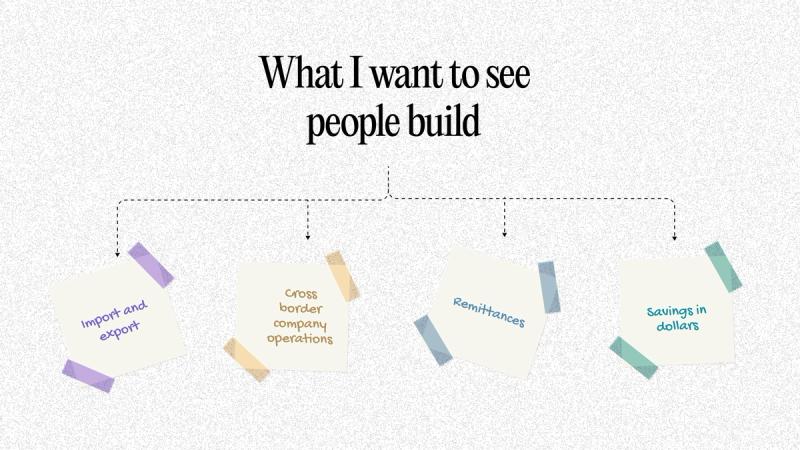
Import and export. A Colombian coffee, flower, avocado, or textile exporter getting paid by buyers in the US or Europe, or a local business paying suppliers in China, Brazil, Mexico, or Panama without waiting on correspondent banking.
Cross border company operations. Hiring someone in Argentina or Nigeria and paying them like they're across in Bogota.
Remittances, especially the corridors nobody with a US license serves well. The Spain to Colombia corridor is the obvious one.
Savings in dollars. In Colombia the practical minimum for a USD bank account puts it out of reach for most of the middle class. A lot of people are not looking for yield or exposure. They just want their money to stop shrinking.
One last thing
We are infrastructure. We don't compete with the people building on us, and we never will. No consumer app, no downstream product that suddenly shows up next to yours, no reason to look at your customer data as an opportunity.
If you are building any of this in Colombia, my DMs are open.
About Blockradar
Blockradar provides secure, developer-friendly stablecoin infrastructure for fintechs. Our non-custodial wallet APIs, transaction monitoring, and AML compliance tools make it easy to launch and scale stablecoin-powered financial services. From USDC and USDT payouts to onchain expense management, we help companies move money instantly and safely across borders—without building blockchain infrastructure in-house.
Blockradar is trusted by payment platforms, remittance providers, and Web3 startups building the future of finance.
Explore our API documentation and get started at https://blockradar.co